
We get emails every week asking what to buy on Amazon. Our answer is always the same: If you’re local to Chicago, buy from a local maker. Support the matcha community that’s building something real in our city.
But we get it—maybe you’re not in Chicago, or you’ve got an Amazon gift card, or you just need something delivered tomorrow. That’s what this guide is for.
For the impatient:
Best Etsy bowl: Art+Vessel Chicago-designed raw clay bowl ($35)
Solid Amazon Kit: TEANAGOO Matcha Kits ($28)
Cheapest Starter Kit: UOOLAA Matcha Kit ($12)
Best whisk: 100-tine bamboo 2-pack ($20)
Best matcha powder: Kitsune or Naoki (~$30+)
Bottom line: If you’re in Chicago, skip Amazon and support local makers like Sugoi Sweets, Monsoon Pottery, or Five Elements. But if you’ve got a gift card burning a hole in your digital wallet, we’ve got you covered with stuff we’ve actually tested.
Skip to: Local Shops • Amazon Bowls • Amazon Matcha Powder
about buying matcha gear on Amazon
Critical disclosure: Everything we recommend here is stuff we’ve actually tried, owned, used, and continue to use. These aren’t random picks—we’ve tested this gear at our monthly matcha meetups, used it in our own kitchens, and whisked hundreds of bowls with these tools. If you order through our links, Amazon gives us a commission, which helps keep NeedMatcha running. But we’re only listing things we genuinely recommend.
Important caveat: Things change. Items sell out, manufacturers adjust quality, and what’s great in fall 2025 might not be the same in 2026. We update this guide regularly, but if you notice something’s off, tell us in the comments.
Quick vocabulary for beginners
Before we dive in, two terms you need to know:
- Chawan = matcha bowl (literally just any bowl, don’t overthink it)
- Chasen = bamboo whisk (you actually need this one)
For absolute beginners: You don’t even need a new chawan to start. Any cereal bowl or Pyrex dish works. Bigger is better—wider and deeper beats narrow and shallow. A flatter bottom helps when you’re learning to whisk. But seriously, don’t get stuck here. Just pick something and start whisking.
If you’re in Chicago: Skip Amazon, buy local
We’re serious about this. Chicago has an incredible community of matcha-friendly makers and shops. Here’s where your fellow matcha obsessives shop:
Sugoi Sweets / Mokoma Select Teas
Artisan shop specializing in handmade chocolates, soft-serve ice cream (vegan options), and matcha tools.
Address: 937 N Ashland Ave, Chicago, IL 60622
Shop matcha bowls: sugoisweets.com/search?q=bowl
Five Elements
Home goods, art, gifts, incense, and tea accessories with a Japanese focus. Great selection of traditional and modern chawans.
Address: 5239 N Clark St, Chicago, IL 60640
Shop matcha bowls: fiveelementshome.com/search?type=product&q=matcha+bowl
Monsoon Pottery
Local potter making custom ceramic tea bowls. Each piece is unique, handmade, and worth the investment if you’re serious about your matcha practice.
Instagram: @monsoonpottery
Events: monsoonpottery.com/pages/events
Available chawans: monsoonpottery.com/search?q=chawan
Chicago Tea House
U.S. outpost of an upmarket German chain with a solid selection of loose-leaf teas and matcha accessories.
Address: 1160 N State St, Chicago, IL 60610
Matcha tools: chicagoteahouse.com/collections/matcha-tools
Best matcha bowls (chawan) on Amazon
💚 Our top pick: Art+Vessel Modern Raw Clay Bowl
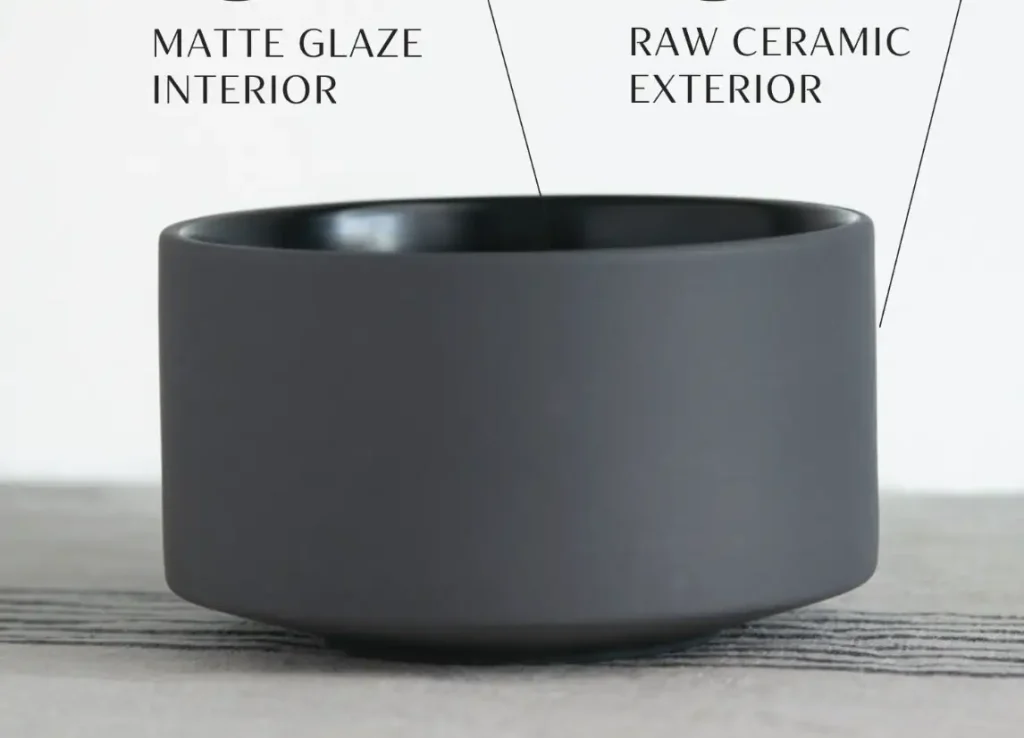
Price: ~$35
Etsy link: etsy.com/shop/ARTANDVESSELline
Okay, so this bowl WAS available on Amazon but now it’s only on Etsy
Why we love it: This is actually from a Chicago designer, so you’re still supporting local craftsmanship even when buying online. The raw clay finish feels substantial in your hands, the proportions are perfect for whisking (wide enough for good chasen movement, deep enough to avoid splashing), and it’s got that modern aesthetic that doesn’t scream “I bought this at a tea ceremony shop.” We use this bowl regularly and it’s held up beautifully through hundreds of whiskings.
Best for: Anyone who wants a single high-quality bowl that’ll last years and looks as good in person as it does on Instagram.
Need Several? This one is also available for businesses. We even recently spotted this bowl in use in a matcha cafe in West Village NYC! Check out Faire for wholesale pricing on a quality matcha bowl.
💚 Morii Bowl & Whisk Set
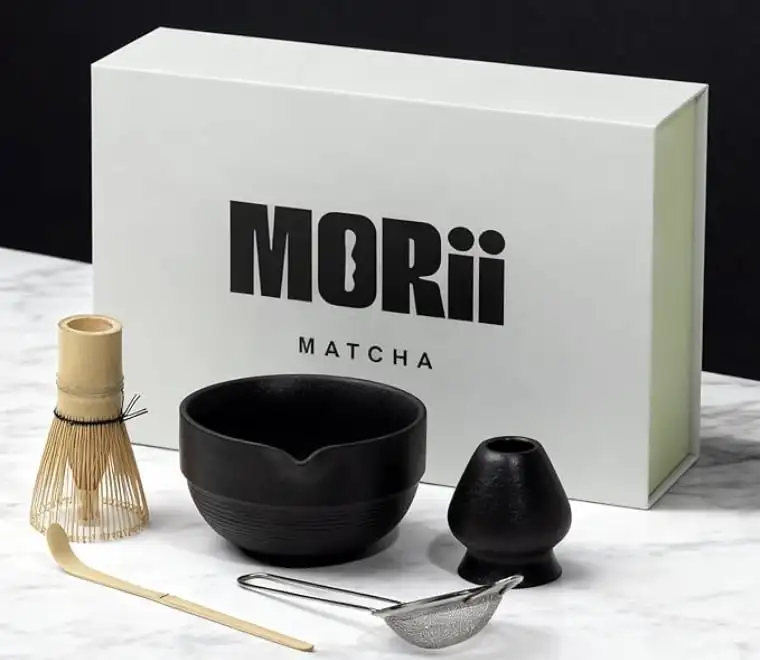
Price: ~$30-35
Amazon link: amzn.to/4n0l5HW
Why it made the list: It just looks and feels good. The bowl has a nice weight that makes it feel substantial without being awkward to hold. The glazing is a little rough with a nice texture, and the shape is comfortable for whisking. It’s one of those sets where the designers actually thought about user experience.
Best for: Latte makers who care about aesthetics and want the whole set without breaking the bank.
💚 TEANAGOO Matcha Bowl & Whisk Set
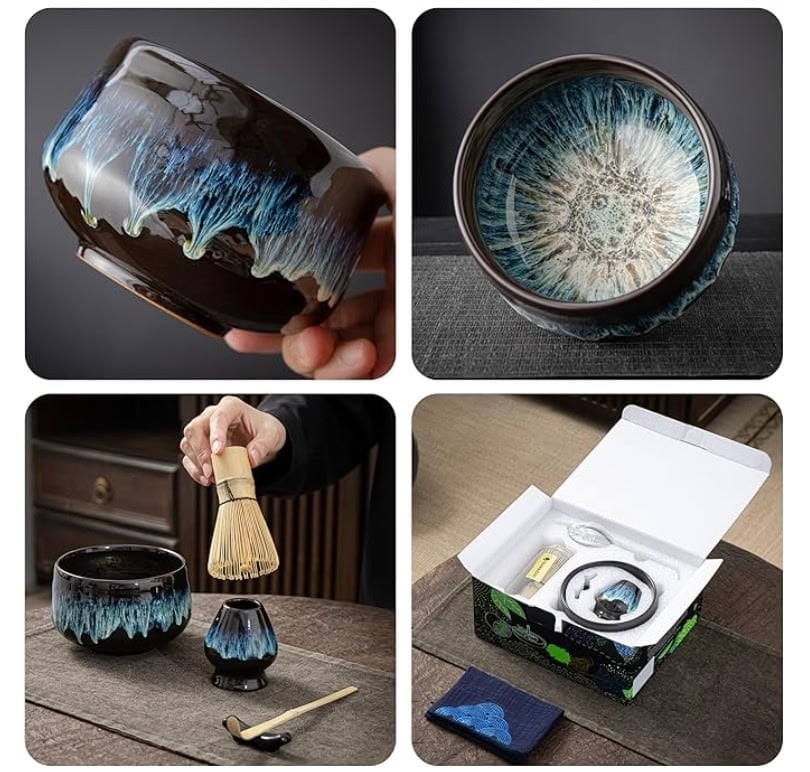
Price: ~$25-55 (depending on kit and design)
Two options we like:
- $26 – Blue Mt Fuji set: amzn.to/4fckwu3
- $28 – Gradient blue set: amzn.to/4gaiHih
- $28 – Black w/splattered glaze:amzn.to/447cE6P
- $50 – Nice larger set with tray & tea caddy: amzn.to/3QzMoit
Why it’s another good standard: Heavy-duty construction, well-made whisk, and thoughtful design. The spout version is particularly useful if you’re making lattes frequently and want easier pouring without spilling matcha everywhere. Unlike cheaper sets that include synthetic cloths, this particular set includes a proper cotton cloth that actually absorbs moisture and looks better.
Best for: People who like a more unique glazing—choose spout for latte-making convenience or no spout for traditional tea preparation.
*Note: we earn extra commission if you buy this one, but it was already on our list before they offered us that!
💚 BambooMN Matcha Bowl Set (No spout)
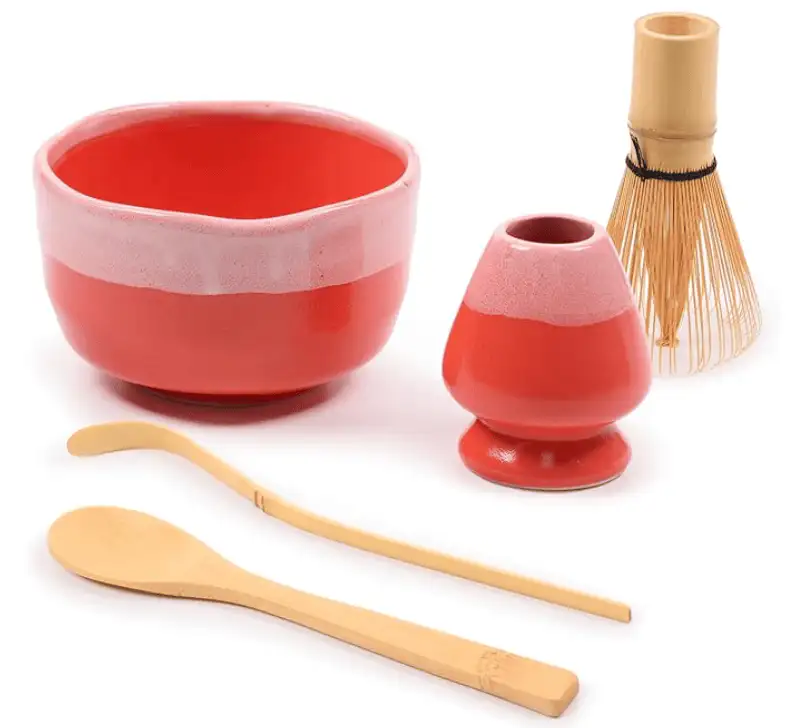
Price: ~$30
Amazon link: amzn.to/4ofErKn
Why it feels more elegant: This bowl has a slightly more refined aesthetic than some of the other options. Still simple and sturdy, but with proportions that feel more intentional. Good choice if you’re giving this as a gift to someone who appreciates design. A nice variety of colors as well.
Best for: Gift-giving or anyone who wants something that looks elevated on a shelf.
💚 UOOLAA Matcha Kits
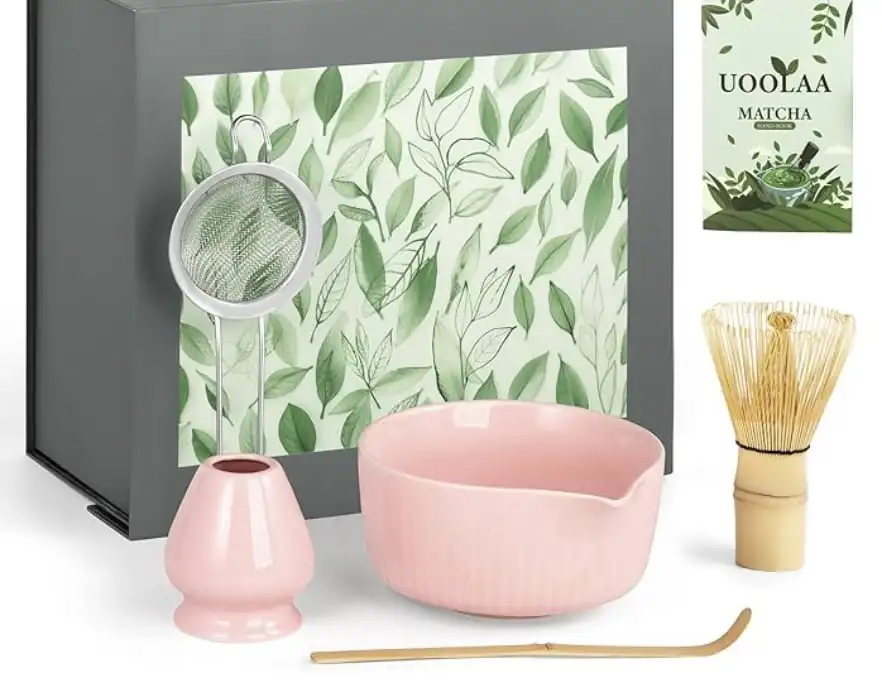
Price: ~$12
Colors available:
- Pink: amzn.to/4woxz20
- Green: amzn.to/4woxz20
UPDATE: These are now cheaper… AND include tools. They were previously only the bowls and were still worth the price.
Why we use these: Sturdy, practical, and affordable. We actually use a couple of these at our monthly Chicago matcha meetups because they’re durable enough to handle being passed around and the spout makes serving easier. The color options are fun without being garish.
Best for: People who need easy bowls for entertaining, or anyone who wants something functional and colorful and comfortable.
Best matcha whisk (chasen) on Amazon
Let’s be real: there are a million chasen options on Amazon. Most are Chinese-made in the Japanese style, which is fine—what matters is construction quality and tine count.
🍵 Want the full whisk deep-dive? We wrote a dedicated guide just for chasen: The Matcha Whisk (Chasen) Buying Guide — what to get, what to skip. Prong counts, the care that actually makes a whisk last, local Chicago shops, and why you don’t need the fancy one.
What beginners need to know:
Tine count (number of prongs): Get a 100-tine whisk. A 120-tine works too, but the 100-tine will last you a little longer and is easier to maintain. Fewer tines (like 80) wear out faster. More tines (like 120) can be harder to clean and dry properly.
Color options: Light bamboo or dark bamboo. This is purely aesthetic—pick what you like.
Size variations you’ll see:
- Standard size: Best for beginners and general use
- Mini/travel whisks: Good for small hands or travel kits
- Long handle whisks: Specialty item for specific preparation styles (skip these for now)
💚 100-Tine Bamboo Whisk 2-Pack (Light & Dark)
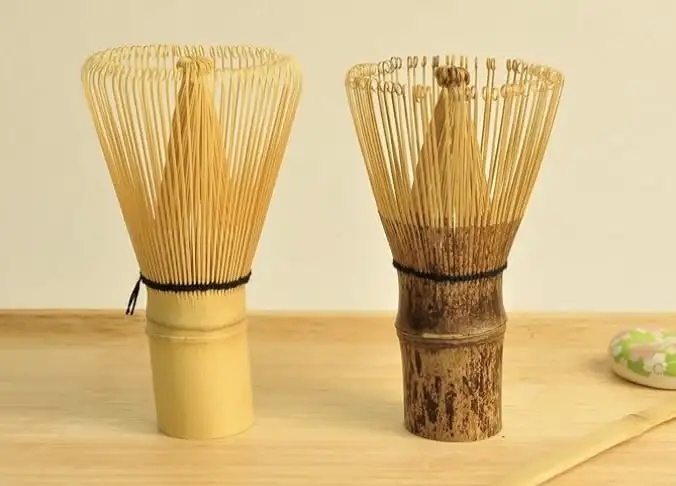
Price: ~$20 (for the 2-pack)
Amazon link: amzn.to/47inRDX
Why this is the one to get: Two whisks for a great price, both light and dark bamboo included. We’ve tested these extensively—they’re just as good as any other 100-tine whisk we’ve tried, including ones that cost 3x as much. The bamboo quality is solid, the tines are well-carved, and they create excellent foam.
Why you want two whisks: One will eventually wear out or break (it’s bamboo, it happens). Having a backup means you’re not stuck waiting for shipping when you need your matcha fix. Plus, having both colors is fun for variety.
Best for: Everyone. Seriously, just get this one (two).
Best matcha powder on Amazon
Here’s what everyone seems to what to know… and where we have to be brutally honest: It’s hard to find truly great matcha on Amazon. Most of what’s available is mediocre at best, with questionable sourcing and quality control. We’ve tried dozens of brands, and we’re only recommending the ones we’d actually drink ourselves.
If you want exceptional matcha, order directly from Japanese suppliers or specialty retailers. But if Amazon is your only option or you need something quickly, here are the picks we trust.
💚💚 Kitsune Matcha (The best we’ve tried)
 Price: $20 for a 28 gram tin
Product page: amzn.to/47kPMlr
Why Kitsune is a top Amazon recommendation: The brand Kitsune is based in California. The matcha in this tin is sourced from Japan. We’ve reached out to Kitsune to find out more about the source, cultivar, etc. We’ll keep you updated. But for the price and the ease of ordering on Amazon, Kitsune is currently our top pick.
We recently tasted this at a Chicago Matcha Club meetup focused on tea from Yame and while it received mixed reviews compared to all the higher quality teas we were tasting, on it’s own, it’s a decent matcha powder. Reliably good for lattes and the occasional usucha (matcha+water-only thin tea).
💚 Naoki Matcha (Multiple grades available)
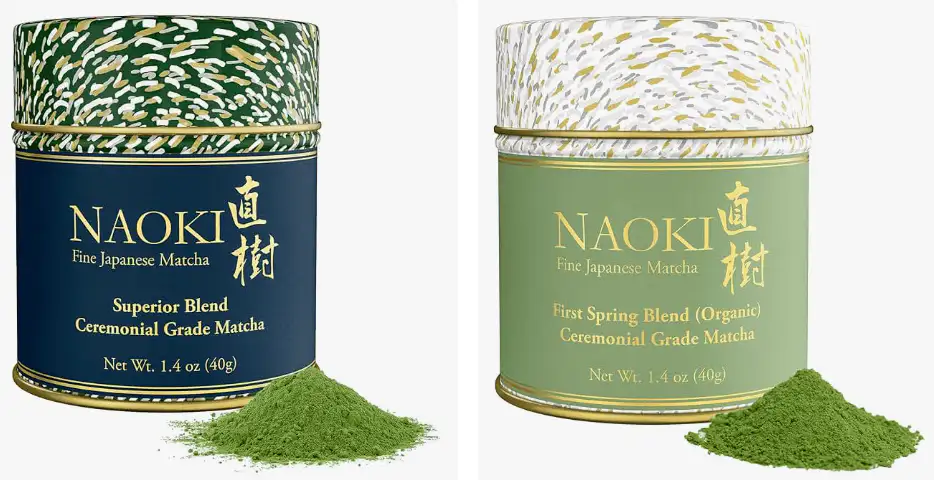
Price range: $28-58 (depending on grade)
Brand page: amzn.to/3IS2vE9
Why Naoki is a top Amazon recommendation: This is one of the better and more authentic brands available on Amazon. They offer a proper range of grades, and their quality control is consistent. We’ve now tried everything in their lineup (and some multiple times) and it’s remained reliably good for lattes and the occasional usucha (matcha+water-only thin tea).
Our favorites for straight matcha tea+water:
- Yame Blend (~$28): amzn.to/4npwrYb
Good budget pick for drinking straight - Ujitawara (~$44): amzn.to/4dhp2Fz
Higher quality from the heart of matcha-land (we’ve seen the farms!)
Notes on which to choose:
Barista Grade (~$28): amzn.to/3KPKJBW
Best for: Lattes, smoothies, baking—anything where you’re adding milk and sugar. This isn’t for traditional tea preparation, but it’s perfect for sweetened drinks and holds up well to other flavors.
Ceremonial Grades (various prices): amzn.to/4nK4NUR
Best for: Traditional matcha tea (just matcha + water). Try their full range if you enjoy straight matcha. The price differences between their ceremonial grades are legitimate quality indicators—you’re getting better leaf selection, more umami, smoother texture, and less bitterness as you move up in price.
Our take on Naoki’s range: There’s something to enjoy about everything they offer. The barista grade isn’t “bad”—it’s just optimized for a different purpose than the ceremonial grades. If you’re new to matcha, start with their mid-range ceremonial option and work your way up if you fall in love with it.
💚🤷 Rishi Everyday Matcha (for Lattes)
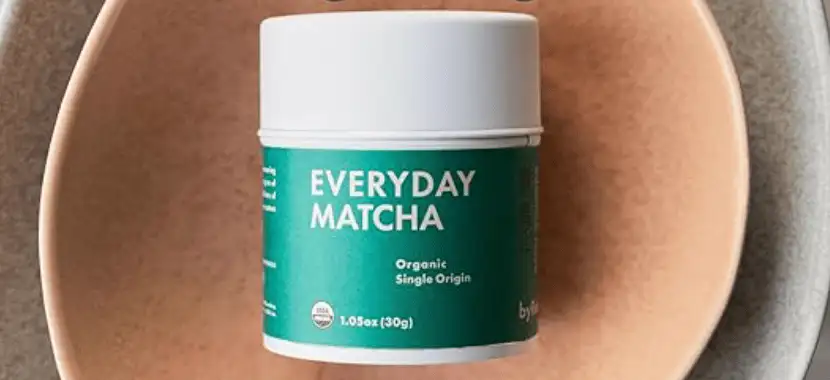
Price: ~$20
Amazon link: amzn.to/4ofp44x
Why it’s okay: This is what a lot of cafés use for lattes, and there’s a reason—it’s affordable, consistent, and works fine when mixed with milk and sweetener. Rishi is a legitimate tea company with decent quality control.
Important caveat: This is maybe just slightly better than a high quality culinary grade matcha. Don’t buy this expecting to make traditional matcha tea with just water. You’ll be disappointed. It’s designed for lattes and baking where the matcha flavor is the forward component among many.
Best for: Budget-conscious latte makers who go through a lot of matcha quickly.
⚠️ Everything else on Amazon
Honestly, that’s all we’re going to recommend right now. We’ve tried a lot of other matcha brands on Amazon, and most of them aren’t worth your money or your time. Common issues we’ve encountered:
- Late harvest matcha that’s just less tasty
- Inconsistent quality between batches
- Misleading grade labels (calling culinary grade “ceremonial”)
- Questionable sourcing with no transparency
- Artificially vibrant green color that tastes like grass clippings
- Poorly milled powder that doesn’t suspend well in water (gritty, clumps, settles immediately)
If you have suggestions: We’re always testing new matcha. If you’ve found something on Amazon that you think deserves consideration, drop a comment below. We’ll buy it, test it, and potentially add it to this guide.
What matcha accessories Should I Get?
What you actually need (priority order):
- Bowl (chawan): Any of the recommendations above
- Whisk (chasen): Get the 100-tine 2-pack we recommended
- Matcha powder: Start with Naoki
- Sifter: Less “necessary” and more just helpful (but if you don’t have one: put a splash of water in the bowl before the matcha and slowly mix with your whisk, then add the rest of the water and whisk normally)
- Hot water source: Kettle with temperature control (ideal: 170-180°F / 77-82°C) or just a regular kettle you can let cool for 2 minutes (2 min / 120 sec)
What you don’t need yet:
- Scoop (chashaku): Nice to have, but a measuring spoon works fine (2g / 0.07 oz / 0.4 US tsp for traditional, 3-4g / 0.11-0.14 oz / 0.6-0.8 US tsp for lattes)
- Whisk holder: Your chasen can dry perfectly well lying on its side on a clean towel
- Tea cloth: A clean kitchen towel works fine
- Fancy storage containers: The original packaging is usually fine if you keep it sealed and away from light
Don’t overthink the accessories. Start simple, get good at whisking, and add fancy tools later if you want them.
Preparation quick reference
Since you’re buying your first matcha gear, here’s the basic method — but try these as starting points and see what works best for you:
Traditional matcha tea (usucha / thin tea)
Ingredients:
- 2-3g matcha powder (0.07 oz / 0.4 US tsp)
- 60-70ml hot water (2.4 fl oz / 4.7 tbsp) at 170-180°F (77-82°C)
Method:
- Sift matcha into bowl (optional but recommended for beginners)
- Add small amount of hot water (about 2 tbsp / 30ml / 1 fl oz) (critical if you don’t have a sieve)
- Slowly mix with whisk into smooth paste
- Add remaining water
- Whisk vigorously in W or M motion for 15-20 seconds until frothy
- Surface should have fine, even foam with no large bubbles
Matcha latte
Ingredients:
- 3-4g matcha powder (0.11-0.14 oz / 0.6-0.8 US tsp)
- 50-60ml hot water (2 fl oz / 4 tbsp) at 170-180°F (77-82°C)
- 200-240ml milk (7-8 fl oz / 0.85-1 cup), steamed or frothed
- Sweetener to taste (we like 1-2 tsp / 5-10ml honey or maple syrup)
Method:
- Whisk matcha with hot water until smooth and frothy
- Add sweetener and stir
- Pour in steamed milk
- Stir gently or create latte art if you’re feeling ambitious
Bottom line: Just start whisking
Look, we could write another 3,000 words about bowl aesthetics and sizes, whisking procedures and techniques, and the philosophical differences between 100-tine and 120-tine whisks. But you don’t need that right now.
What you actually need:
- A bowl you like looking at (Art+Vessel or LTLR set)
- A 100-tine whisk (the 2-pack we linked)
- Decent matcha powder (Naoki, any grade that fits your budget)
- Hot water around 170-180°F (77-82°C)
Buy those things. Start whisking. Make terrible matcha a few times while you figure out your technique. Join our community discussions and tell us how it’s going. That’s literally all you need to become a matcha obsessive.
The rest is just refinement and increasingly nerdy conversations about umami depth and foam texture that we’ll happily have with you once you’re swimming in matcha like the rest of us.
Your turn—what are we missing?
We’re constantly testing matcha gear and updating our recommendations. Have you found something on Amazon that’s actually worth buying? Or maybe you tried one of our picks and had a totally different experience?
Drop a comment below and help your fellow matcha freakniq family make better buying decisions. We’re building this knowledge base together—one perfectly whisked bowl at a time.
And if you’re in Chicago: Seriously, skip Amazon and visit one of our local shops. The matcha community here is special, and supporting local makers keeps it thriving. Plus, you get to actually hold the bowls before buying, which is kind of important when you’re about to develop an obsessive relationship with one.
Last updated: Fall 2025
Next review: We’ll re-test everything and update this guide quarterly
Reply
You must be logged in to post a comment.